
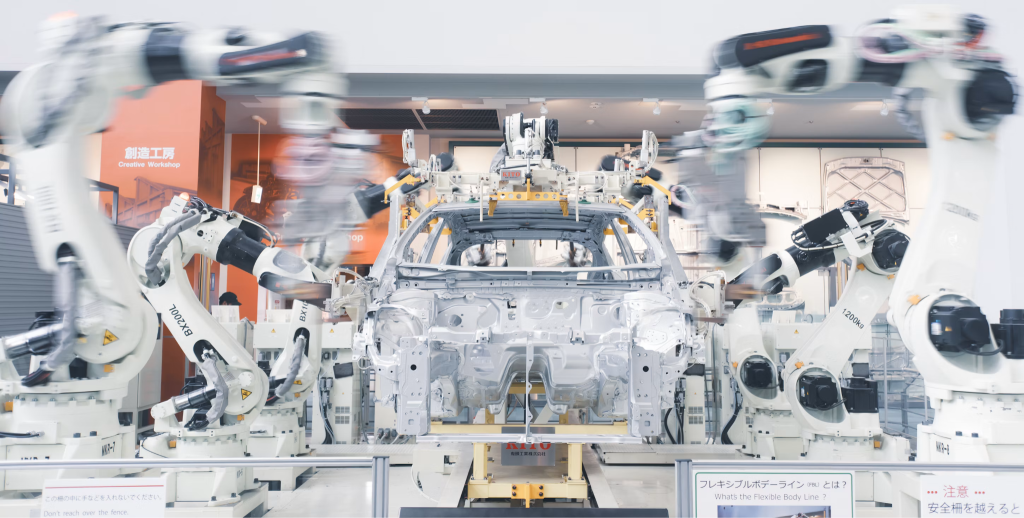
Repeated lifting, awkward reaching, and constant twisting can leave factory workers dealing with fatigue, pain, and injuries that disrupt both their health and production. Reducing these physical demands doesn’t have to mean sacrificing efficiency or operator control. Discover how collaborative robots, safer workstation designs, and thoughtful automation can improve workplace safety while keeping operations productive.
The Ergonomic Toll of Manual Handling
Manual handling exposes workers to repeated lifting, reaching, twisting, and awkward postures. A single movement may seem harmless, but repetition over weeks or years can contribute to fatigue and musculoskeletal injuries. The risk rises when loads are bulky, pickup heights vary, or employees must keep pace with a moving production line.
Factories should start by observing complete work cycles. Record load weights, lift frequency, reach distance, and the height at which each item begins and ends. Employee feedback matters too. Operators often notice strain points that a brief assessment misses. If you’re looking at ways to make daily operations more efficient, it’s worth exploring how businesses can cut down on repetitive manual work. Evidence on how robots improve workplace health also shows why reducing repetitive physical demands deserves attention alongside productivity.
Where Collaborative Robots Fit Best
Collaborative robots, often called cobots, can support tasks where employees and automated equipment need to work in the same general area. Common applications include machine tending, case packing, pallet loading, and transferring parts between stations. Their value is strongest when the movement repeats consistently, but production volumes or product types change often.
A cobot still requires a proper risk assessment. Payload, speed, gripping method, and the surrounding process all affect how a cell should operate. Start with a task that has stable inputs and a clear source of ergonomic strain. A pilot cell can then reveal cycle-time limits, operator concerns, and maintenance needs before the factory expands the concept to other lines.
Designing Safer Workstation Layouts
Automation delivers better results when the entire workstation supports safe movement. Place incoming materials within the robot’s practical reach, keep pedestrian routes clear, and give operators easy access to controls. Guarding, sensors, and emergency stops should reflect the actual hazards of the application, including nearby conveyors and fixtures.
Layout planning also needs to account for jams, cleaning and product changeovers. If employees must climb, overreach, or squeeze behind equipment during routine service, the cell has simply moved the ergonomic problem. Manufacturers considering a custom robotic cell can work with an integrator such as Capital Automation to connect the robot, conveyor, feeding equipment, and packaging process within one coordinated design.
Keeping Skilled Operators in Control
Operators provide judgment that automation cannot replace. They spot unusual finishes, packaging damage, and changes in machine sounds. Well-designed robotic systems support this expertise with clear controls, useful alarms, and simple pause or reset options.
Training should cover normal operation as well as foreseeable faults. Let workers practice recovering from a misplaced item, changing a gripper, and restarting after a stop. Managers should also discuss how roles will change before installation. Research into the psychosocial impacts of cobots highlights the need to consider trust, workload, and worker involvement, not only technical output.
Calculating Long-Term Safety Returns
A realistic business case includes more than the robot’s purchase price. Calculate engineering, tooling, installation, training, and scheduled maintenance, then compare those costs with measurable gains. Useful figures include injury-related downtime, overtime coverage, damaged products, rejected parts, and minutes lost to fatigue or task rotation.
Establish a baseline before installation, then track lift counts per employee, near misses, cycle consistency, and unplanned stoppages. Measure success beyond output: reducing repetitive lifting while maintaining production can lower disruptions and improve employee retention.
The best automation projects leave workers with fewer strain-heavy movements and more authority over quality and exceptions. When a factory can point to a specific task, document its physical demands, and define how operators will interact with the new cell, robotic lifting becomes a practical safety investment instead of a technology experiment.