
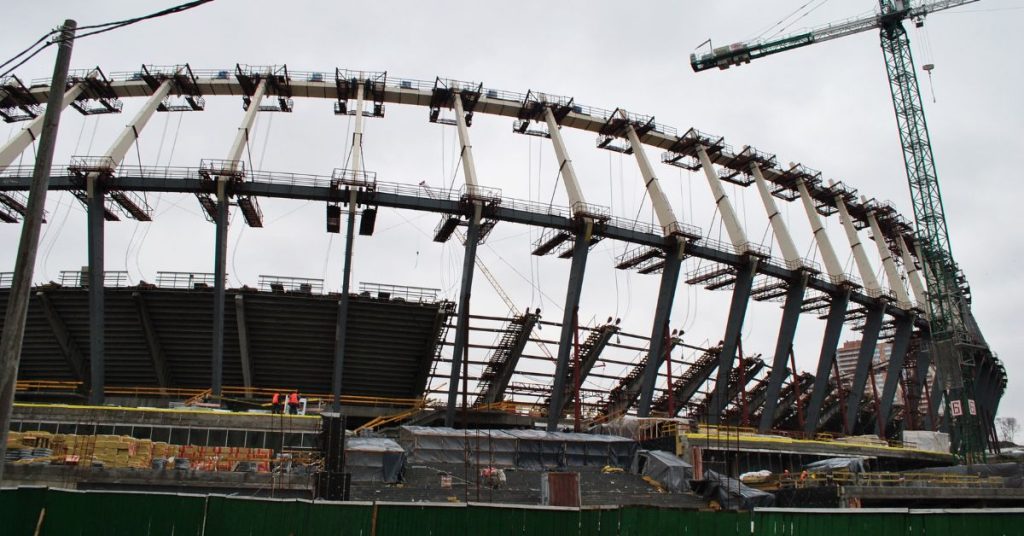
Stadium design has entered a new phase. Teams, cities, and architects no longer treat these venues as isolated structures. They now design them as connected, high-performance environments that influence everything from urban development to fan behavior.
Recent projects show a clear shift in priorities. Designers focus on adaptability, climate responsiveness, and long-term relevance rather than one-time spectacle. For anyone tracking innovation in architecture or tech-driven spaces, these examples reveal how futuristic stadiums will change the game and continue to reshape what a venue can be.
1. Grand Stade Hassan II (Casablanca, Morocco)
This planned 115,000-seat venue will become the largest football stadium in the world. Designers based the concept on traditional Moroccan gathering spaces and reimagined them at a massive scale. A sweeping tensile roof creates a tent-like form that anchors the structure visually and functionally.
The design connects cultural identity with modern engineering. It shows how large-scale architecture can reflect heritage without losing forward momentum.
2. King Salman International Stadium (Riyadh, Saudi Arabia)
Designers shaped this 92,000-seat stadium around the surrounding landscape. The structure mirrors nearby mountains through layered geometry and stepped forms. This approach allows the building to feel embedded in its environment instead of placed on top of it.
3. New Highmark Stadium (Buffalo, USA)
Buffalo’s new stadium tackles one of the toughest climates in professional sports. Engineers designed the seating bowl and structure to reduce wind impact while preserving an open-air feel. The layout improves comfort without sacrificing the identity of outdoor football.
New Highmark Stadium highlights how climate shapes future stadiums. Function drives form in a way that directly improves the fan experience.
4. Brisbane Olympic Stadium (Brisbane, Australia)
This 63,000-seat stadium will anchor the 2032 Olympics. Planners focused on long-term use instead of short-term spectacle. The structure supports multiple event types through adaptable seating and flexible infrastructure.
The design avoids the common issue of post-event underuse. It prioritizes relevance long after the Olympics end.
5. Etihad Park (Queens, New York)
Etihad Park brings a different scale to the conversation. The 25,000-seat stadium for New York City FC uses a transparent roof to balance protection and openness. Natural light will still reach the pitch while the structure shields fans from the weather.
This hybrid approach creates a more comfortable and visually connected environment. It also shows how smaller venues can lead in design innovation.
6. Eco Park Stadium (Stroud, UK)
Eco Park challenges conventional stadium construction. Designers plan to build it almost entirely from wood, which lowers the project’s carbon footprint. The material choice also introduces a warmer, more natural aesthetic.
This approach redefines what large venues can look like and how they perform environmentally. It pushes sustainable design into new territory.
7. New Nissan Stadium (Nashville, USA)
The new Tennessee Titans stadium shifts toward a fully enclosed model. Designers included a translucent roof to control lighting while maintaining a connection to the outdoors. The structure supports year-round use across sports and entertainment events, including the Super Bowl in 2030.
8. EverBank Stadium Renovation (Jacksonville, USA)
Jacksonville chose to upgrade rather than rebuild. The renovation introduces a large canopy system that increases shade and improves airflow. The new roof form reshapes the stadium’s identity while preserving its core structure.
This approach highlights the value of adaptive reuse. It shows how existing venues can evolve through targeted design changes. Many of these upgrades rely on advanced facade systems that improve airflow and shading.
9. Cathedral Proposal (Milan, Italy)
Designers created this concept as a new home for two historic clubs (AC and Inter Milan). The structure relies on strong geometry and vertical emphasis instead of decorative excess. Its form aims for longevity rather than trend-driven appeal.
Sustainability plays a central role in the design strategy. The project focuses on efficiency without losing its visual identity.
10. Cleveland Browns Stadium Proposal (Cleveland, USA)
The Cleveland Browns have explored a new stadium concept that could include a fully enclosed dome. Designers aim to create a venue that supports year-round events beyond football. The proposal also connects the stadium to a broader mixed-use development; a growing trend in modern design.
11. Chicago Bears Stadium Proposal (Chicago, USA)
The Chicago Bears continue to develop plans for a new stadium resembling Las Vegas’ Allegiant Stadium with a dome and an integrated entertainment district. Designers remain focused on the venue’s flexibility and its ability to host large-scale events. The concept also prioritizes accessibility and urban connectivity.
12. Washington Commanders Stadium Proposal (Washington, USA)
The Commanders’ plans emphasize a modern venue within a mixed-use development as designers aim to create a space that supports both game days and daily activity. The stadium would anchor a broader urban experience that blends with the American capital’s existing architecture.
13. Manchester United Stadium Proposal (Manchester, UK)
Manchester United continues to explore options for redeveloping or replacing Old Trafford. Designers aim to balance tradition with modern expectations. Early concepts focus on improving sightlines, comfort, and infrastructure.
The project reflects the challenge of evolving an iconic venue. It shows how legacy clubs approach modernization without losing their identity.
14. Kansas City Chiefs Stadium Proposal (Kansas City, USA)
The Kansas City Chiefs have explored plans that range from renovating Arrowhead to building a new stadium in Kansas. New concepts focus on upgraded fan areas and expand surrounding development. Designers aim to enhance the game-day experience without losing the venue’s identity.
15. Denver Broncos Stadium Proposal (Denver, USA)
The Denver Broncos have begun exploring long-term options for a new privately funded stadium at Burnham Yard. Early ideas include joining in on the trend of building a new venue with a retractable roof that could support a wider range of events year-round.
Designing the Stadiums of Tomorrow
Modern stadiums reflect more than engineering ambition. They show how architecture adapts to changing expectations around sustainability, flexibility, and experience. Each project on this list approaches those challenges in a distinct way.
As new materials and construction methods develop, these ideas will continue to expand. The stadium of the future will not just host events—it will actively shape how people experience them.


