
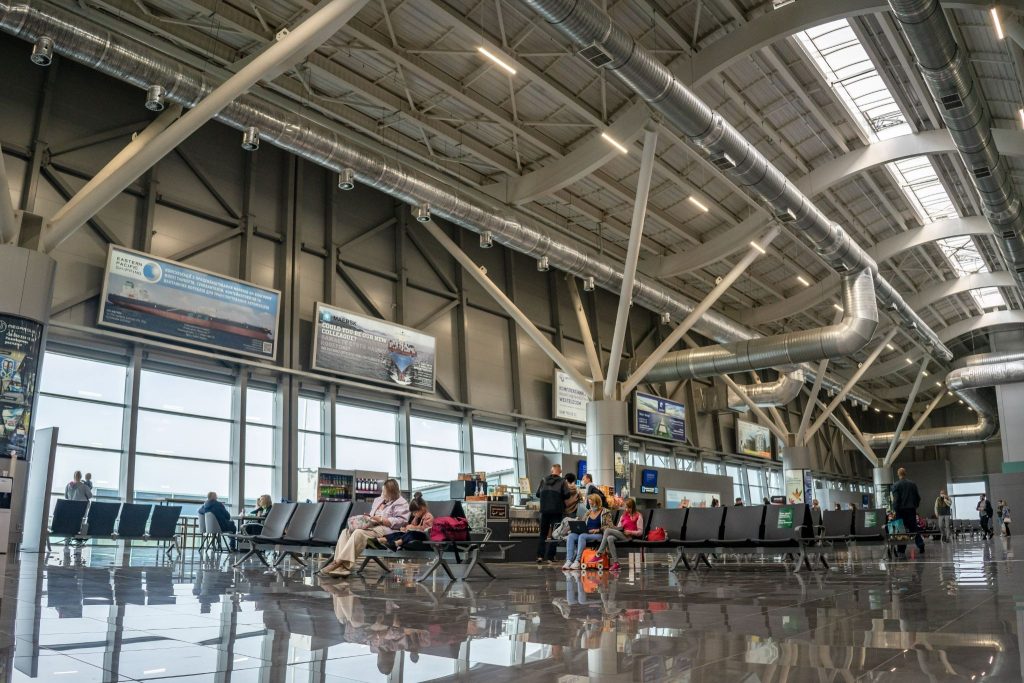
The majority of brands that look into airport advertising assume there is only one route in: to go straight to whoever owns the screens and billboards at their chosen airport and then take whatever pricing and format options they’re given.
That’s wrong.
Agencies like Airport Adverts are proving that assumption wrong and are building an entire business around the idea that brands are better served by someone weighing up the whole market on their behalf rather than being locked into a single supplier’s inventory from the outset.
It’s a simple idea really, but it’s opening up airport advertising to brands who might otherwise have written it off as too complicated, too rigid or simply out of reach.
Who Are Airport Adverts?
Airport Adverts is a specialist agency built around planning and buying airport advertising space on behalf of brands rather than owning any of that inventory itself. That’s a deliberate choice, and it shapes everything the company does and how they operate. They cover a varied spread of airports including major UK names such as Heathrow, Gatwick, and Manchester alongside international hubs such as Amsterdam Schiphol, Dubai, Singapore Changi, and JFK. Its own airport directory lists dozens of individual terminals across the UK, the United States, Europe, the UAE, Australia and Japan. This points to a planning operation built for global reach rather than a handful of familiar locations.
One of the plus points is they’re easy to contact too. Brands can get in touch via phone, email, or they can submit a campaign brief through the website to receive a tailored quote, which helps make the entire process simple and straightforward.
The Case For Going Independent
This is where Airport Adverts really shines. Rather than governing the advertising space itself, the agency works non-exclusively with major media owners like Global and JCDecaux. In practice this means the brands they work with get independent advice on where their budget is best spent as opposed to it being funnelled toward whichever inventory a single media owner happens to have available.
While going direct to a media owner might seem simpler on paper, it also means only ever seeing one slice of the market with no one weighing that option against what might be a better fit.
This matters more than it might first appear. Airport advertising isn’t uniform. What works at Heathrow won’t necessarily work at Manchester, and a format that suits a luxury retail brand might be completely wrong for a travel or FMCG campaign. This is where the planning layer comes in. It’s beneficial for brands as there’s someone in the middle of them and the media owners who actually thinks through what fits rather than a brand having to work it out alone.
It also means a brand isn’t stuck with a single media owner’s pricing or availability if a better option exists elsewhere since the agency’s job is to compare across the market rather than sell whatever inventory it happens to already hold.
Backed By Genuine Engagement Data
None of the above would really matter if airport advertising itself wasn’t effective. This makes seeing the numbers important. Airport Adverts points to research from Nielsen that shares 80% of frequent flyers noticing airport advertising and 42% of travellers saying airport ads are informative and influential in their decision-making. Airports also see an average dwell time of around 90 minutes per passenger, largely because there’s simply nothing else competing for attention once someone’s cleared security. That combination of high visibility and long exposure time is a big part of why airport advertising keeps getting harder to ignore.
Formats Built Around The Brief, Not The Other Way Around
Because Airport Adverts isn’t tied to one media owner’s inventory, it can plan across a range of formats including digital displays, billboards, experiential installations, baggage claim advertising, airport lounges and sponsorship opportunities.
Business lounges are specifically highlighted as a strong option. Given the high dwell time and more affluent, business-oriented audience typically found there. That range means a campaign brief can shape the format choice rather than a brand being limited to whatever’s available through a single supplier. A brand chasing broad visibility, for instance, might be steered toward a large format digital display in a busy terminal; one targeting business travellers specifically could be better served by a lounge placement instead. It’s the agency’s job to work out which options fit best before a brand commits to a budget.
The Brands Already On Board
There is an extensive and pretty impressive client list that has run campaigns with Airport Adverts, and these all back up their premium positioning too. Names like Hugo Boss, Jet2Holidays, Gucci, Johnnie Walker, Breitling and Hilton have all placed advertising through the agency, which says plenty about the level of brand this kind of independent advisory approach tends to attract.
Pricing Works for Brands Big and Small
An approach like this can often command a high price tag for its services. But that’s not the case here. Airport Adverts claim their prices start from £750 for a small poster placement. Prices then scale from here and vary depending on the airport, format, campaign length and audience reach. This removes a barrier that often puts advertising at this scale out of reach for smaller brands.
What’s The Catch?
Nothing is perfect, and that’s the case here too. There’s always going to be some drawbacks, even minor ones. And for Airport Adverts, these include the fact that availability isn’t always guaranteed. As they work through media owner partners rather than holding their own space, popular locations and formats can sell out months in advance. This means that access depends on what its partners have available. On top of this, lead times can be longer than expected. Premium airport formats tend to get reserved well in advance, so this isn’t a same-week turnaround.
Final Verdict
Choosing an independent agency over going straight to the media owners comes down to a simple trade-off. You get slightly less direct control in exchange for someone genuinely weighing up what’s actually the best fit for a brand’s budget and goals. For brands that would rather have that kind of advice in their corner over navigating airport media alone, Airport Adverts makes a solid case for themselves.


