
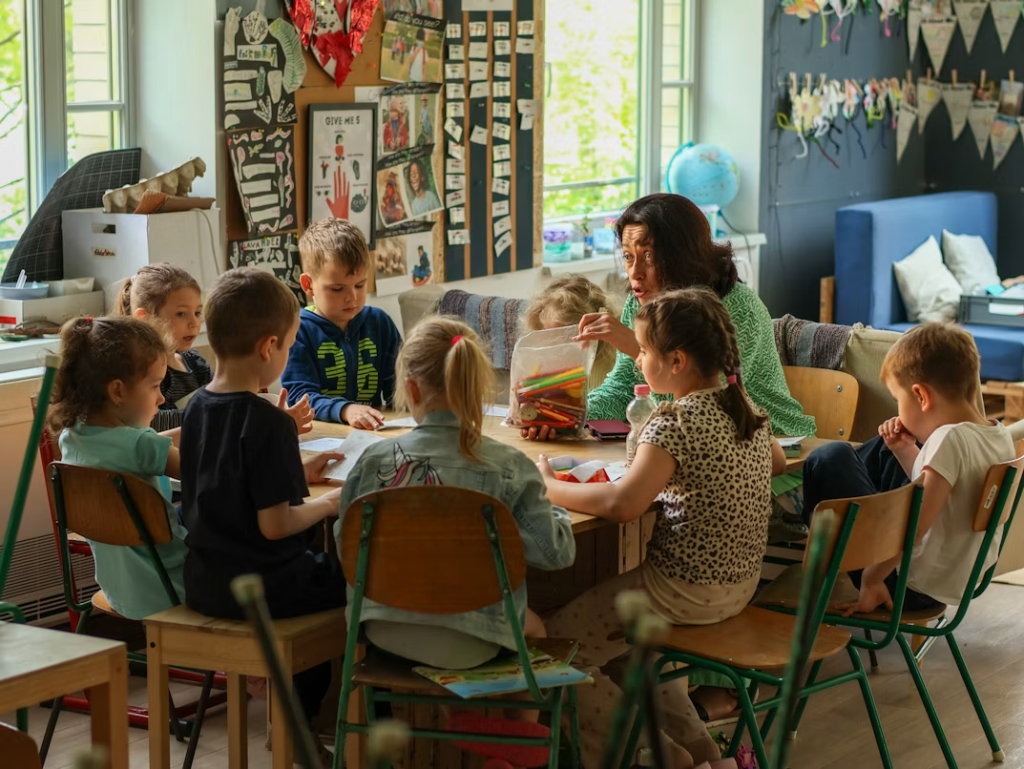
 Image Credit: Unsplash
Play is often seen as the heart of childhood, a time for freedom and imagination. While unstructured, spontaneous play is important, another type offers unique advantages for a child’s growth. Structured play, which is guided and goal-oriented, provides a powerful framework for developing critical life skills.
Understanding the benefits of structured play can help parents and educators create a well-rounded environment for children to thrive.
What is Structured Play?
Structured play involves activities led by an adult with a specific learning goal or outcome. Unlike free play, where a child directs their own activity, structured play includes rules, instructions, or a set goal. Think of it as play with a purpose.
You can see examples all around us:
- Playing a board game with clear rules.
- Following a recipe to bake cookies.
- Participating in an organized sport like soccer or gymnastics.
- Building a specific model with blocks by following instructions.
This type of play isn’t about rigid control. Instead, it offers a scaffold that helps children learn to navigate rules and work towards a common objective. It gives them a safe space to practice skills within a predictable framework.
Boosting Cognitive Skills
When a child gets involved in a structured activity, their brain gets a fantastic workout. Following rules means they use their working memory, hold instructions in their mind, and apply them in sequence. This process is fundamental to developing executive functions, mental skills like planning, focus, and self-control. For instance, a simple game of “Simon Says” teaches listening skills and impulse control.
These activities also boost child development by encouraging logical thinking and problem-solving. If a child is building a puzzle, they must recognize shapes and patterns to find the right fit. If they are playing a strategy game, they learn to think ahead and anticipate consequences. This goal-oriented thinking builds neural pathways essential for academic learning and everyday tasks later in life.
Supporting Physical Development
Structured play can also help children develop strength, coordination, balance, and body awareness. Activities such as obstacle courses, dance routines, relay races, and organized sports encourage children to move in specific ways while following instructions. Repeating these movements helps improve both gross motor skills, such as running and jumping, and fine motor skills, such as gripping, drawing, or assembling small pieces.
Because each activity has a clear goal, children can see their physical abilities improve over time. Completing a movement that once felt difficult can motivate them to keep practicing and become more comfortable using their bodies. These positive experiences can also encourage an active lifestyle and help children associate exercise with enjoyment rather than obligation.
Parents and educators can support this development by choosing activities suited to the child’s age and abilities. Challenges should be engaging without becoming overwhelming, with opportunities to rest, adjust, and try again. Encouragement and positive feedback can help children focus on their effort and progress instead of comparing their performance with others.
Encouraging Social Interaction
Structured play is a powerful way to teach social skills. When children play a game together, they must learn to take turns, share, and negotiate. They discover the importance of cooperating to achieve a shared goal, whether it’s winning a team game or completing a group project. It provides a natural setting for understanding and respecting others’ perspectives and feelings.
This environment also helps children learn to manage their emotions. They experience the excitement of winning and the disappointment of losing within a controlled setting, teaching them resilience and good sportsmanship. Learning to follow a leader, stick to rules, and contribute to a group effort are all foundational skills for successful interaction in school, friendships, and eventually the workplace.
Building Confidence and Persistence
Structured activities give children clear, achievable challenges that allow them to experience progress. Completing a puzzle, learning the steps of a dance, or mastering a new rule provides a sense of accomplishment. This helps children develop confidence in their ability to learn, practice, and improve.
Not every activity will be easy on the first attempt, which is part of its value. With patient guidance, children learn that mistakes are a normal part of the process rather than a reason to quit. Working through frustration and trying again builds persistence, adaptability, and a healthier attitude toward future challenges at school and in everyday life.
Adults can strengthen these lessons by praising effort, patience, and problem-solving rather than focusing only on the result. Asking children what they tried or what they might do differently next time encourages reflection and a growth mindset. Over time, they begin to see challenges as opportunities to learn instead of situations they should avoid.
How Venues Support Development
Dedicated play venues, like indoor playgrounds and family entertainment centers, are excellent places for structured play. These spaces are often designed with specific activities, classes, or themed events that guide children through goal-oriented fun. An obstacle course, for example, has a clear start and finish, with rules about how to navigate each challenge. A staff-led craft session provides materials and instructions to create a specific item.
For these venues to run smoothly, operators often rely on specialized indoor playground software to manage bookings, control capacity for group activities, and organize events. This ensures a positive and structured experience for families. By offering a safe, supervised, and purpose-built environment, these centers make it easy for children to engage in activities that are both fun and developmentally beneficial.
Balancing Free Play and Structure
It’s important to remember that structured play isn’t meant to replace free play. Both are essential for a child’s well-rounded development. Free play is where creativity, imagination, and independence blossom. Children invent their own worlds, make up their own rules, and learn to entertain themselves. Structured play, on the other hand, hones specific cognitive and social skills within a guided framework.
The ideal approach is a healthy balance. After a session of organized sports or a board game, give your child plenty of time for open-ended play with simple toys like blocks, art supplies, or dress-up clothes. This combination allows them to build specific competencies through structure while also fostering the independent thinking and creativity that come from freedom.
Both forms of play work together to equip children with the diverse set of skills they need to navigate the world confidently and successfully.


