
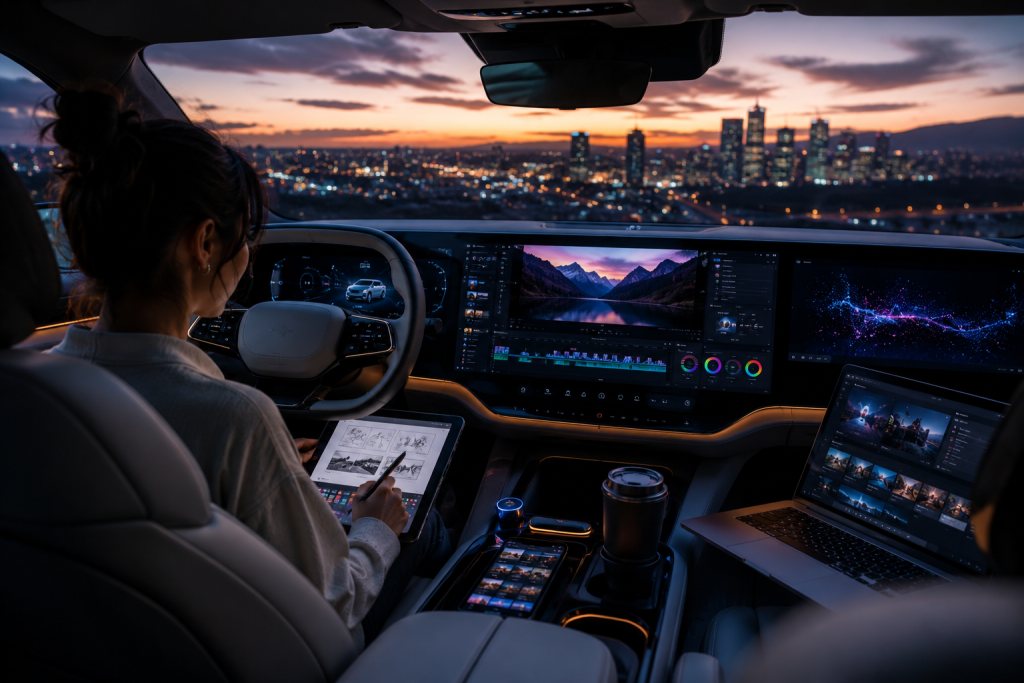
For much of automotive history, cars were defined by mechanical engineering. Performance, reliability, and design shaped how manufacturers competed and how drivers connected with their vehicles. Today, however, a different transformation is taking place. Increasingly, modern vehicles are being designed less like isolated machines and more like connected digital environments.
Large touchscreen displays, AI-powered assistants, immersive audio systems, cloud-based software updates, and highly customisable interfaces are rapidly changing what drivers expect from their cars. In many cases, vehicles now mirror the creative and digital workflows people use throughout the rest of their lives.
This shift reflects a broader convergence between the automotive and technology industries. Cars are no longer simply methods of transport. They are becoming interactive platforms shaped around personal expression, connectivity, and digital experience.
The Modern Car Functions More Like a Smart Device
The average new vehicle now contains an extraordinary amount of software. Navigation, climate controls, entertainment systems, charging management, driver assistance, and communication tools are increasingly integrated into centralised digital operating systems.
This has fundamentally altered the role of the vehicle interior. Traditional dashboards built around buttons and gauges are being replaced with software-driven environments designed to evolve over time through updates and new features.
For drivers accustomed to smartphones, tablets, and connected devices, this feels increasingly natural. Many consumers now expect their vehicle to operate as an extension of their wider digital ecosystem rather than as a standalone machine.
The result is that the automotive industry is borrowing heavily from consumer technology design principles, particularly around usability, personalisation, and seamless connectivity.
AI Assistants Are Changing Human-Vehicle Interaction
Artificial intelligence is becoming one of the most influential parts of the in-car experience. Voice assistants can now manage navigation, control vehicle settings, recommend charging stops, read messages aloud, and integrate with smart home systems.
As these systems become more advanced, the interaction between driver and vehicle begins to resemble the relationship people already have with digital assistants on phones and computers.
This shift matters because it changes how drivers psychologically experience the vehicle itself. Cars are becoming more conversational, responsive, and adaptive. Instead of purely mechanical interaction, drivers increasingly engage with software interfaces that learn habits and preferences over time.
In many ways, the vehicle is evolving into a personalised digital workspace as much as a transport environment.
Creative Consumption Happens Inside the Vehicle
The rise of connected infotainment systems has also transformed the car into a major media space. Streaming platforms, podcasts, cloud gaming, high-resolution audio systems, and immersive visual interfaces are now common features in many premium and electric vehicles.
This is especially relevant as vehicles become quieter and more technologically integrated. Electric vehicles, in particular, create cabin environments where media experiences feel more immersive due to reduced engine noise and smoother driving characteristics.
For passengers, long journeys increasingly resemble mobile entertainment sessions. For remote workers and creatives, vehicles can also function as temporary productivity spaces equipped with Wi-Fi connectivity, charging ports, and cloud-synchronised tools.
This reflects a larger cultural shift where digital lifestyles no longer pause during travel.
Personalisation Is Becoming Central to Vehicle Identity
Customisation has always existed within automotive culture, but the nature of personalisation is evolving. Historically, drivers focused heavily on mechanical modifications or exterior styling. Today, software and interface customisation are becoming equally important.
Drivers can now personalise display layouts, ambient lighting themes, sound profiles, AI assistant behaviour, and connected app ecosystems. Vehicles are increasingly designed to adapt to individual preferences in the same way digital devices do.
At the same time, visual identity remains important. Many motorists still want their vehicles to reflect personality and aesthetic taste, particularly in an era where cars are frequently shared online through social media and lifestyle content. Brands like Number 1 Plates exist within this wider culture of vehicle individuality, where subtle forms of personalisation contribute to a more cohesive ownership identity rather than overt modification alone.
The modern vehicle is therefore becoming both digitally and visually customisable in ways previous generations of drivers did not expect.
Automotive Brands Are Competing on Experience
As software becomes more central to the driving experience, automotive manufacturers are increasingly competing on digital quality rather than solely mechanical performance.
User interface design, operating system responsiveness, app integration, and over-the-air update capability now influence purchasing decisions alongside range, safety, and reliability.
This has also opened the door for technology companies to play a much larger role within the automotive sector. Software firms, AI developers, and consumer electronics companies all see the vehicle as a valuable extension of the connected digital economy.
The competition is no longer simply about building better cars. It is increasingly about creating better digital experiences inside those cars.
The Car Interior Is Becoming a Multi-Use Environment
Autonomous driving technology, even in its partial forms, is accelerating another important trend: the transformation of the cabin into a flexible multi-use space.
As driving requires less constant physical input, manufacturers are rethinking how interiors function. Relaxation, entertainment, collaboration, and productivity are becoming key design priorities.
Future vehicle interiors may resemble mobile lounges or studios more than traditional cockpits. Rotating seats, adaptive displays, augmented reality systems, and AI-generated interfaces are already being explored across the industry.
This evolution aligns closely with how modern consumers already work and create across multiple connected environments throughout the day.
Conclusion
Cars are becoming creative technology platforms because modern mobility is no longer defined purely by transportation. Vehicles increasingly function as connected digital environments where people communicate, work, consume media, personalise experiences, and express identity.
AI assistants, immersive interfaces, cloud connectivity, and customisable software systems are reshaping the relationship between drivers and their vehicles. At the same time, automotive brands are adapting to a world where digital experience matters just as much as engineering performance.
The future car may still move people physically from one place to another, but increasingly it will also operate as an extension of their digital and creative lives.


